
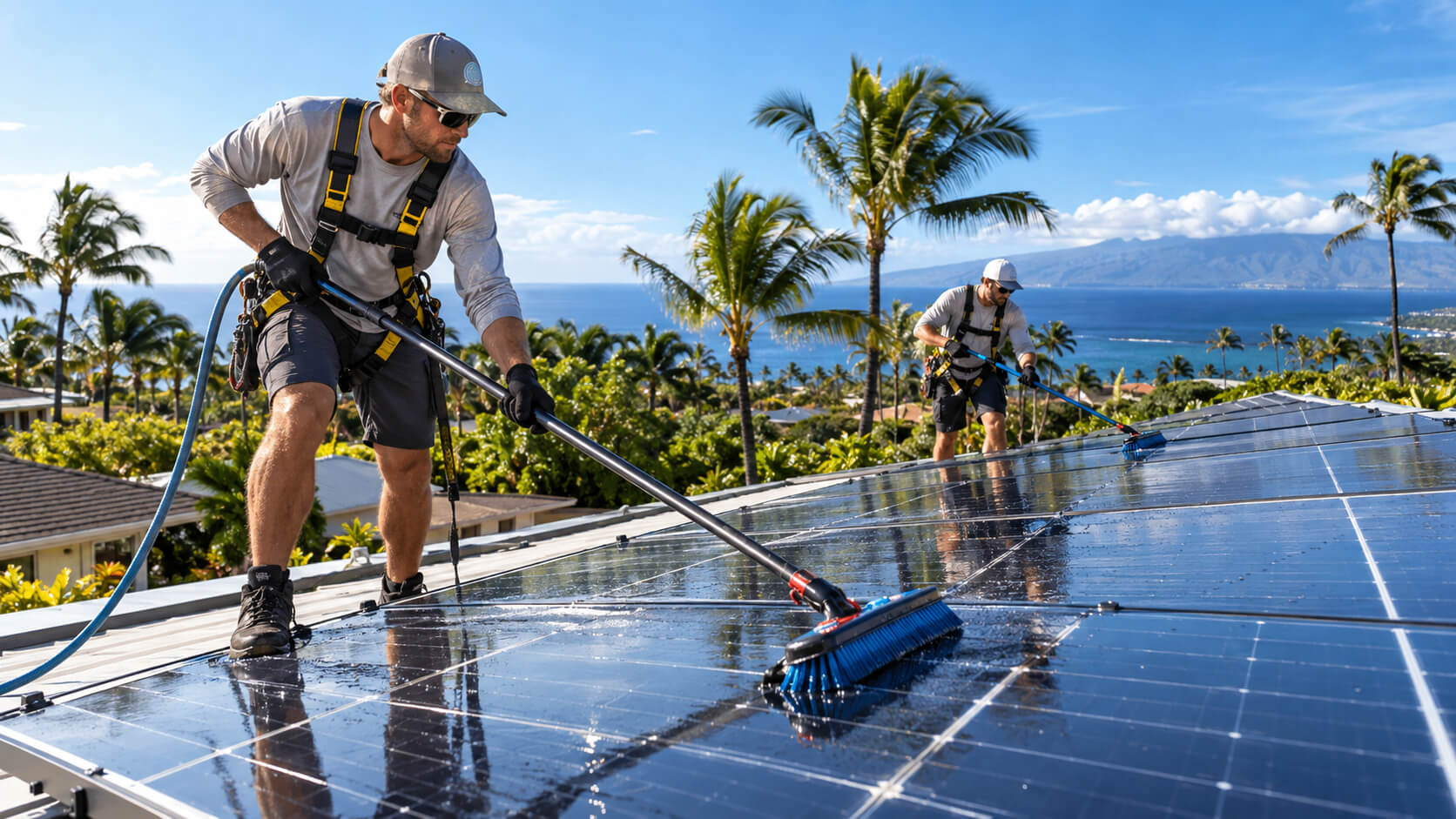
Choosing a solar panels cleaning company requires clarity about what “cleaning” includes. It may cover module glass only, while roof inspection, electrical tests, rail repairs, and inverter troubleshooting remain outside the job. Owners should see each task named before booking.
Hawaii Island’s coastal air, pollen, dust, birds, and roof conditions create site-specific maintenance needs. The best service plan fits the array and its manufacturer instructions rather than promising the same frequency or output increase to every customer.
This guide helps homeowners compare companies, understand the limits of cleaning, and maintain useful records. TTT Industries provides solar panel cleaning on Hawaii Island as one part of its property-care services.
Table of Contents
Quick Facts and Key Takeaways
| Topic | What to Know |
|---|---|
| Company review | Scope, staff, method, access, records, and referrals |
| Manufacturer fit | Use approved tools, water, and cleaning instructions |
| Electrical boundary | Cleaning alone does not diagnose or repair a system |
| Economics | Use customer-specific tariff and monitoring data |
| Repeat service | Set interval from evidence rather than a generic guarantee |
Check company scope and responsibility
Ask whether the company cleans only module surfaces or offers additional inspection. If it claims to inspect electrical components, ask which qualified personnel perform that work and what report the customer receives. A cleaner should not imply that the array is electrically sound simply because the glass is clean.
Clarify who is responsible for roof damage, broken tiles, leaks, or a module discovered cracked during service. The provider can document visible conditions, but installation repairs or roof work should be assigned to the appropriate contractor.
Review materials and manufacturer requirements
The modules’ maintenance manual is the primary reference for cleaning. Ask the company to identify its brush or pad, water source, and any cleaning solution. Avoid abrasive tools or unapproved chemicals that could scratch glass, damage coatings, or affect the warranty.
A quality record can list the date, access conditions, sections cleaned, materials used, photos, and anything not reached. This helps compare service over time without claiming a performance guarantee.
Use performance data to decide whether to repeat
Compare monitoring over similar conditions and note local soiling sources. NREL’s research shows that rainfall does not always remove pollen fully, but that does not mean every panel needs frequent cleaning. A regular schedule should be supported by evidence from the specific site.
Hawaii’s electricity prices make output relevant to many owners. EIA averages are only statewide background; the customer’s tariff, net-energy arrangement, system size, and soiling loss determine individual economics.
Verified Data Points Worth Knowing
- NREL reported that rainfall may not wash enough pollen from modules to restore prior performance.
- DOE includes module cleaning within PV operation and maintenance resources and advises a broader maintenance approach.
- EIA’s Hawaii profile lists a 2024 average retail electricity price of 38.00 cents/kWh across sectors; customer tariffs differ.
These references provide general context. They do not establish a Hawaii Island quote, certify a particular contractor, or replace product labels, manufacturer instructions, or rules that apply to the specific property.
What to Check Before You Begin
Use the site condition, written scope, access plan, and closeout details to compare options. Ask the provider to explain any assumption that affects cost, safety, material choice, or schedule.
- Ask for a written definition of cleaning versus inspection.
- Verify that tools and water follow module manufacturer guidance.
- Confirm roof access and responsibility for visible damage.
- Request a record of areas reached, method, and exceptions.
- Use site monitoring to decide whether recurring service is worthwhile.
TTT Industries and Other Ways to Handle the Project
The comparison below is a planning aid, not a ranking. Match the approach to the project size, surface condition, access, and qualifications the work requires.
| Approach | Potential strength | Limit to consider |
|---|---|---|
| Cleaning company | Module surface care | Confirm access, methods, and reporting |
| Solar O&M provider | Broader planned maintenance | Check electrical qualifications and exact deliverables |
| Installer | Repairs and commissioning advice | Ask whether routine cleaning is offered or referred |
No approach suits every property. Compare the actual work, access, and risk before choosing between a specialist, a broader maintenance provider, or an owner-managed project.
A Practical Hawaii Island Project Plan
- Collect module model, monitoring, and roof details.
- Ask for company scope and method in writing.
- Review safe access and manufacturer requirements.
- Approve one-time or recurring service based on site evidence.
- Keep the service report with system records.
A written plan makes the work easier to review because the owner and provider can see the same surfaces, responsibilities, and decision points. Adjust the steps to the property and confirm product or safety requirements with the appropriate source.
When TTT Industries Is a Good Fit and When It Is Not
TTT Industries provides solar panel cleaning on Hawaii Island. Confirm that the requested scope is surface cleaning and ask what documentation is supplied. Use the system installer or qualified solar technician for wiring, inverter, module repair, or performance diagnosis.
Related Reading Within This Topic Cluster
- Solar Panel Cleaning Near Me on Hawaii Island for related planning and service guidance.
- Solar Panel Cleaning Service on Hawaii Island for related planning and service guidance.
- Solar Panel Cleaning Services in Hawaii for related planning and service guidance.
These topics answer different questions within the same service area. Link the live pages together after publication so readers can move from initial research to a more specific planning decision.
Solar panels cleaning company: questions to ask before booking
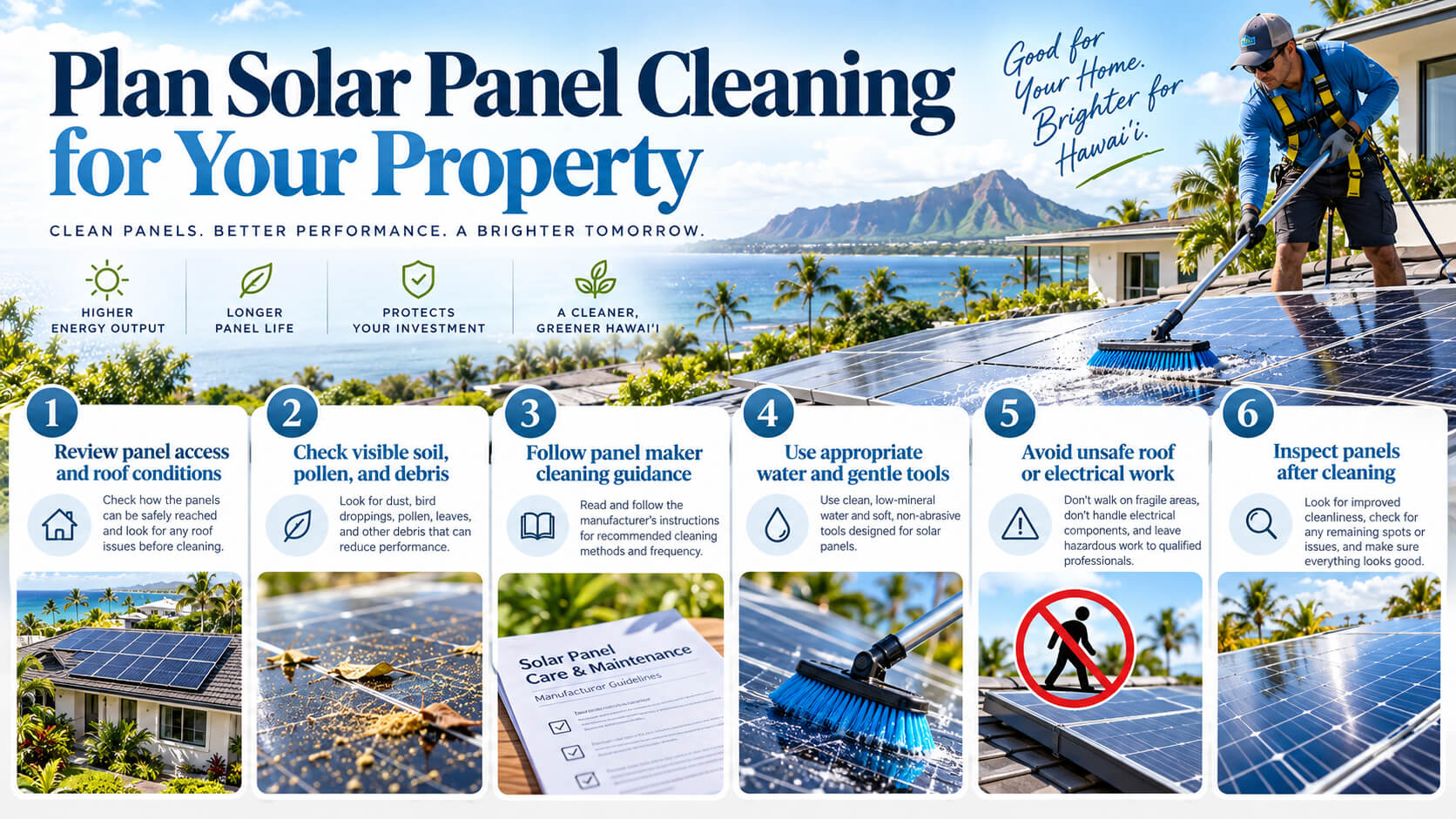
When comparing a solar panels cleaning company, ask what the visit includes and what is outside the service scope. Confirm whether the provider checks access, visible soiling, panel condition, and nearby roof features before work. Clear boundaries help distinguish cleaning from electrical inspection or system repair.
Ask how the cleaning method follows the module manufacturer’s guidance. Confirm what water and tools are used, how the crew avoids unnecessary pressure or abrasion, and how roof access is managed. If a panel appears cracked, loose, or otherwise damaged, ask who should assess it before cleaning proceeds.
Discuss how the result will be documented. A provider may describe the surfaces cleaned, note access limitations, and point out visible concerns without claiming that cleaning will restore a specific level of energy production. Keep monitoring records separate from the cleaning service so performance changes can be discussed with a qualified solar professional.
Before scheduling, confirm the property location, roof access needs, timing, and estimate details. TTT Industries offers solar panel cleaning on Hawaiʻi Island. Contact the company by phone or email to discuss the site and the work you want reviewed.
Keep the system manual, installation records, and cleaning notes together. When reviewing a solar panels cleaning company, use those documents to ask whether the proposed service matches the module guidance and whether any visible concern should be referred to your installer.
If the provider finds a damaged panel, loose connection, or roof concern, ask that cleaning pause in that area until the appropriate technician reviews it. Keep the observation in the service notes rather than treating it as a repair included in cleaning.
When searching “solar panels cleaning company,” verify service coverage for the exact property location and ask what roof and system conditions the provider will assess. A sound plan for “solar panels cleaning company” should account for manufacturer care guidance, access, water use, module condition, and any limits on removing stubborn residue. On Hawaiʻi Island, discussions about “solar panels cleaning company” should address salt, dust, pollen, bird debris, rain, and the safe route to the panels.
Final Thoughts
The most useful decision starts with the property and the work it needs. Review the actual condition, compare a clear scope, and make sure the plan respects access, safety, materials, and local site conditions.
For a Hawaii Island assessment, contact us and describe the surfaces or service you want reviewed. The company can confirm whether the request fits its current scope.