
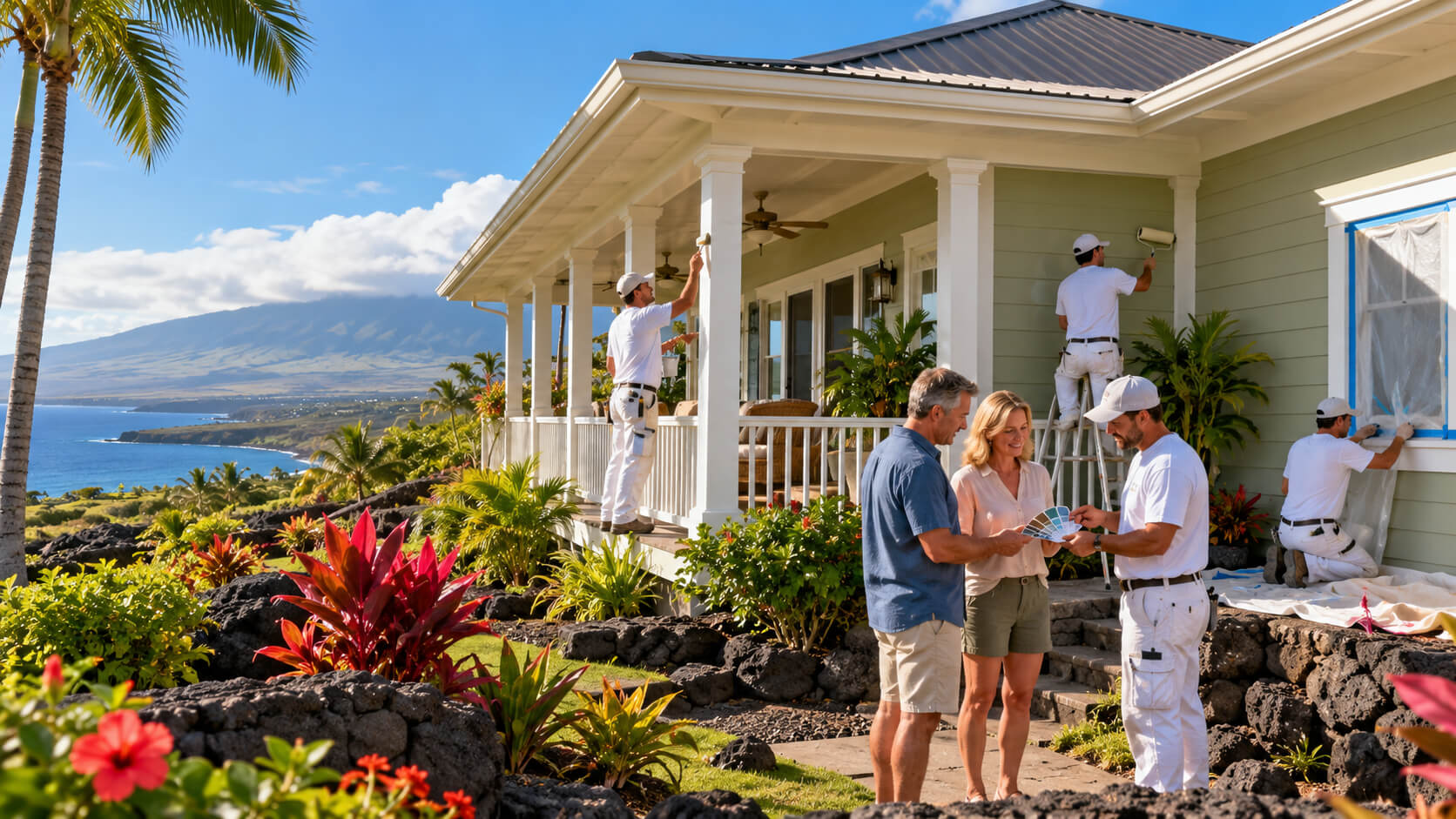
Hiring exterior house painters can feel straightforward until a proposal leaves out preparation, repairs, or access. A clear estimate should state what the crew will do to each surface, how the property will be protected, and what is excluded.
On Hawaii Island, sun, wind, salt exposure, and moisture can affect different sides of one house in different ways. That makes an in-person inspection valuable. Photos help, but they do not show every loose board, chalking surface, or hard-to-reach detail.
This guide focuses on homeowners comparing exterior house painters and preparing for the work. TTT Industries serves Hawaii Island with painting and related property-cleaning services.
Table of Contents

Quick Facts and Key Takeaways
| Topic | What to Know |
|---|---|
| Bid quality | Surface-specific preparation and clear exclusions |
| Older home check | Determine whether lead-safe rules apply to the work |
| Schedule | Weather, drying, access, and recoat conditions |
| Protection | Entrances, windows, landscaping, vehicles, and fixtures |
| Closeout | Daylight inspection by elevation with a touch-up list |
Ask how the painter will judge readiness
A clean-looking wall is not necessarily ready for paint. The painter should check for loose coatings, chalking, mildew staining, failed caulk, and moisture concerns. Ask what preparation is included and whether the crew will pause if the surface is damp or a repair is outside the scope.
If the home predates 1978 and work will disturb paint, ask whether EPA’s lead-safe renovation rules apply. The rule has specific definitions, thresholds, and exceptions; do not infer the answer from age alone.
Use written details to avoid surprise add-ons
The bid should describe surfaces and preparation, not just “exterior painting.” Look for washing, scraping, sanding, patching, caulking, primer, finish coats, masking, access equipment, cleanup, and allowances. If some work is conditional, ask how it will be priced and approved.
A useful bid also names the paint or coating system, sheen, and color-approval process. Ask whether the product label specifies temperature, moisture, or recoat conditions that influence schedule.
Plan for a lived-in property
During painting, windows may be masked, doors may be temporarily unavailable, and outdoor items may need to be moved. Agree on which entrances remain usable and where vehicles should park. If the painter needs water or access through a gate, decide how that will work before the crew arrives.
Set a final walk-through for a time when the light shows each elevation clearly. Bring the approved scope and make notes by location so touch-ups can be completed efficiently.
Verified Data Points Worth Knowing
- EPA says paid work disturbing paint in pre-1978 housing and child-occupied facilities may fall under its RRP rule; covered firms must follow lead-safe requirements.
- Sherwin Williams gives a typical exterior coverage range of roughly 250 to 400 square feet per gallon, depending on product and surface conditions.
- OSHA counted 389 fatal falls to a lower level among 1,034 construction deaths in 2024, relevant to elevated work planning.
These references provide general context. They do not establish a Hawaii Island quote, certify a particular contractor, or replace product labels, manufacturer instructions, or rules that apply to the specific property.
What to Check Before You Begin
Use the site condition, written scope, access plan, and closeout details to compare options. Ask the provider to explain any assumption that affects cost, safety, material choice, or schedule.
- Confirm surface preparation and repair allowances in writing.
- Ask how lead-safe requirements will be assessed for older housing.
- Name the product, sheen, number of coats, and weather conditions.
- Plan access, windows, vehicles, plants, and outdoor belongings.
- Walk every elevation with the approved scope before closeout.
TTT Industries and Other Ways to Handle the Project
The comparison below is a planning aid, not a ranking. Match the approach to the project size, surface condition, access, and qualifications the work requires.
| Approach | Potential strength | Limit to consider |
|---|---|---|
| Detailed written bid | Makes scope and allowances easier to review | Check that every elevation and trim surface is listed |
| Short quote | Fast to read | May leave prep, coats, and protection assumptions unstated |
| Time-and-materials | Can fit uncertain repair work | Agree on rates, approval points, and documentation |
No approach suits every property. Compare the actual work, access, and risk before choosing between a specialist, a broader maintenance provider, or an owner-managed project.
A Practical Hawaii Island Project Plan
- Gather property age, photos, and access details.
- Get an on-site inspection and written scope.
- Confirm product, colors, weather windows, and staging.
- Clear the work zones and protect household routines.
- Use one daylight walk-through to close the scope.
A written plan makes the work easier to review because the owner and provider can see the same surfaces, responsibilities, and decision points. Adjust the steps to the property and confirm product or safety requirements with the appropriate source.
When TTT Industries Is a Good Fit and When It Is Not
TTT Industries is a Hawaii Island option for owners seeking painting and related cleaning services. Ask for a site-specific proposal and confirm whether the company’s scope covers the home’s exact surfaces and access conditions. Contact a lead-safe or specialty contractor when the work requires qualifications beyond ordinary painting.
Related Reading Within This Topic Cluster
- Exterior House Painter Guide for Hawaii Island for related planning and service guidance.
- Exterior Painters for Hawaii Island Homes for related planning and service guidance.
- Exterior Painting Services on Hawaii Island for related planning and service guidance.
These topics answer different questions within the same service area. Link the live pages together after publication so readers can move from initial research to a more specific planning decision.
Exterior house painters: compare preparation and communication
Ask exterior house painters how they will assess the home before providing a detailed estimate. Point out peeling areas, trim damage, mildew, previous repairs, and surfaces that are difficult to reach. A site review can make the proposed preparation more specific to the house.
Compare the written scope line by line. Look for cleaning, scraping, sanding, repairs, primer, number of coats, materials, equipment, and cleanup. Ask which conditions are excluded and how the contractor will price an unplanned repair if one becomes visible.
Talk through protection of plants, paths, windows, doors, and outdoor furnishings. Confirm what the homeowner should move and how the crew will keep access safe for residents. Weather and drying conditions should also be discussed so schedule changes are not a surprise.
Ask how the completed work will be checked and how touch ups will be recorded. Keep approved colors and product information with your project documents. TTT Industries can discuss exterior painting for Hawaiʻi Island homes and help clarify what an estimate covers.
When comparing exterior house painters, keep each written proposal and site note together. Reviewing the same surfaces, preparation, access, protection, and cleanup helps you ask focused questions before making a decision.
If your home has gates, pets, parked vehicles, or restricted entry, mention them during the estimate. Clear access arrangements help the painter plan the visit and reduce avoidable interruptions once materials are on site.
Final Thoughts
The most useful decision starts with the property and the work it needs. Review the actual condition, compare a clear scope, and make sure the plan respects access, safety, materials, and local site conditions.
For a Hawaii Island assessment, contact TTT Industries and describe the surfaces or service you want reviewed. The company can confirm whether the request fits its current scope.