

An exterior house painter should be able to explain how the home’s surfaces will be prepared before discussing the final color. Exterior coating performance depends on what is underneath, whether moisture is present, and whether the selected product fits the substrate and exposure.
On Hawaii Island, homes may face strong sun, driving rain, salt air, shade, or combinations that change around the island. Two elevations on the same house can weather differently. A useful estimate reflects the actual home rather than a generic square-foot figure.
This guide covers inspection, scheduling, paint selection, and contractor questions for homeowners considering exterior painting. TTT Industries serves Hawaii Island with residential and commercial painting and related cleaning services.
Table of Contents
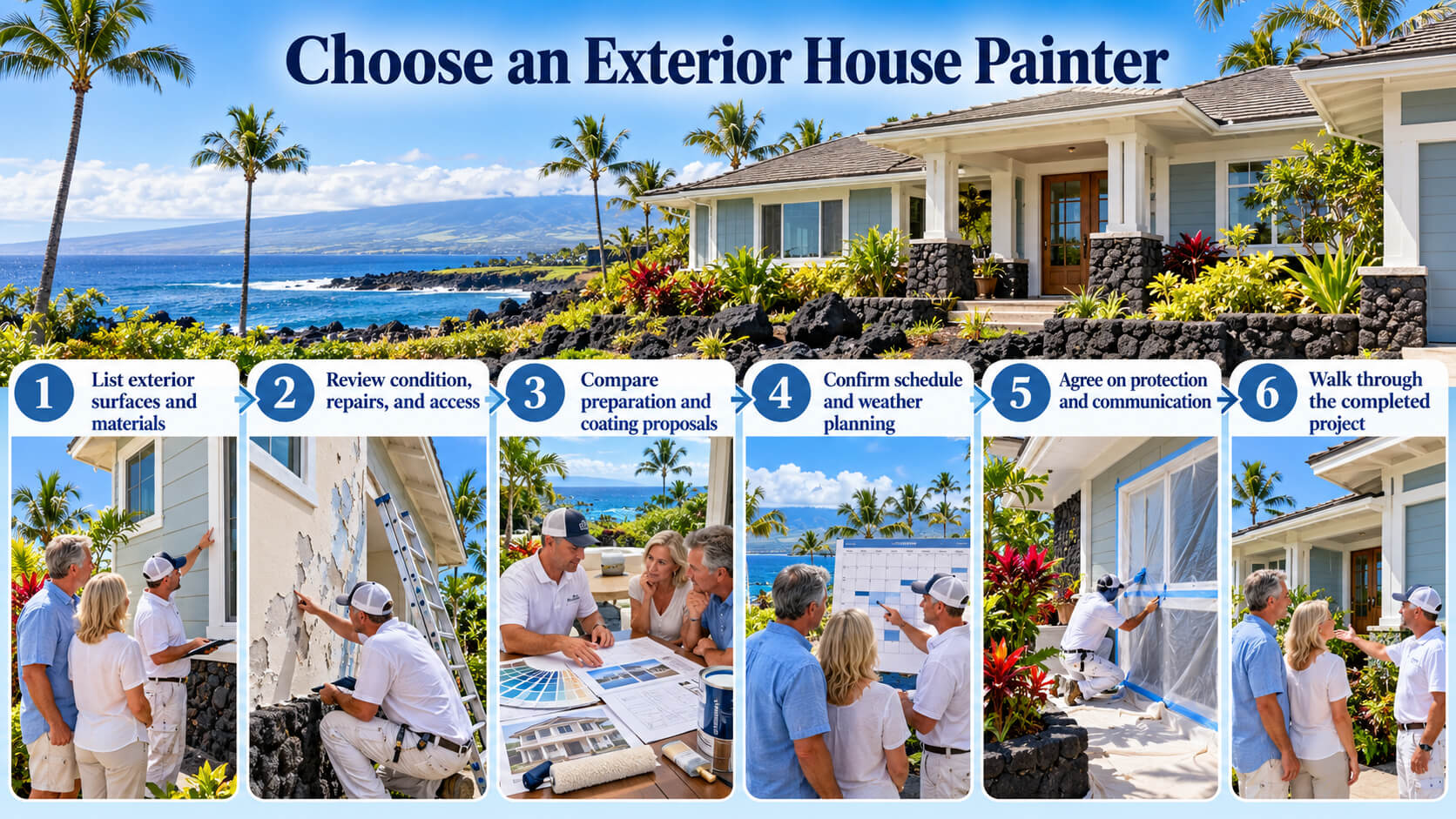
Quick Facts and Key Takeaways
| Topic | What to Know |
|---|---|
| Primary goal | Protect and refresh the home’s exterior surfaces |
| First inspection | Siding, trim, joints, peeling, moisture, and access |
| Hawaii Island factor | Exposure differs by elevation, orientation, and local conditions |
| Schedule control | Surface dryness and product directions matter more than a fixed date |
| Color step | Test samples on several walls and observe them at different times |
Inspect siding, trim, and transitions
Walk the house and note peeling, chalking, cracked caulk, soft wood, mildew staining, rust, and areas that stay damp. Pay attention to end grain, joints, window trim, fascia, and places where water collects. These clues help distinguish routine repainting from repairs or moisture problems that should be handled first.
An exterior house painter should identify where washing, scraping, sanding, patching, caulking, or spot priming is planned. Preparation will differ for wood, masonry, stucco, metal, and previously coated surfaces. Ask which defects are included and which would trigger a separate repair.
Schedule around weather and drying
Exterior work needs suitable conditions for washing and coating. A calendar date alone cannot guarantee that a surface is dry or that temperature and weather meet the product label. The contractor should explain how the forecast, shade, morning dew, wind, and rain affect the day’s work.
On a home with several exposures, the crew can sometimes shift from a damp or sun-heated elevation to a better area. That flexibility depends on the property layout and product instructions. Build reasonable weather flexibility into the schedule rather than treating every pause as poor planning.
Choose color and finish for the actual home
Color samples look different under direct sun, deep shade, and cloudy conditions. Test larger samples on more than one elevation and look at them at different times of day. Confirm whether trim, doors, and body color use different products or sheens.
The lowest-sheen finish may help disguise minor surface variation, while other sheens can be easier to clean; the right choice depends on the product and surface. Ask the paint supplier or contractor to confirm compatibility and maintenance expectations instead of relying on a color image alone.
Verified Data Points Worth Knowing
- Sherwin Williams says exterior paint coverage is generally around 250 to 400 square feet per gallon, depending on product and conditions.
- OSHA reports 389 fatal falls to a lower level out of 1,034 construction fatalities in 2024; homeowners should ask how elevated exterior work will be protected.
- For paid work disturbing paint in pre-1978 housing, EPA’s RRP rule may require certified firms and lead-safe work practices, depending on the activity and scope.
These references provide general context. They do not establish a Hawaii Island quote, certify a particular contractor, or replace product labels, manufacturer instructions, or rules that apply to the specific property.
What to Check Before You Begin
Use the site condition, written scope, access plan, and closeout details to compare options. Ask the provider to explain any assumption that affects cost, safety, material choice, or schedule.
- Ask for a surface-by-surface inspection and preparation scope.
- Confirm how soft wood, moisture, failed caulk, and peeling will be handled.
- Review product label conditions and weather contingencies.
- Test colors on more than one wall and view them in changing light.
- Clarify access equipment, landscaping protection, cleanup, and touch-ups.
TTT Industries and Other Ways to Handle the Project
The comparison below is a planning aid, not a ranking. Match the approach to the project size, surface condition, access, and qualifications the work requires.
| Approach | Potential strength | Limit to consider |
|---|---|---|
| Professional exterior house painter | Defined preparation and coating sequence | Confirm the proposal names surfaces and repairs |
| DIY approach | Owner controls timing and product choices | Owner assumes ladder, prep, and finish-quality responsibilities |
| Maintenance provider | May handle limited touch-ups | Verify exterior coating experience and scope |
No approach suits every property. Compare the actual work, access, and risk before choosing between a specialist, a broader maintenance provider, or an owner-managed project.
A Practical Hawaii Island Project Plan
- Photograph each elevation and mark visible damage.
- List siding, trim, doors, and other surfaces separately.
- Ask for a written prep and coating sequence.
- Choose color samples after confirming product and sheen options.
- Set the weather window and closeout inspection with the exterior house painter.
A written plan makes the work easier to review because the owner and provider can see the same surfaces, responsibilities, and decision points. Adjust the steps to the property and confirm product or safety requirements with the appropriate source.
When TTT Industries Is a Good Fit and When It Is Not
TTT Industries may be a fit for Hawaii Island homeowners seeking exterior painting or pressure washing that supports a broader property-maintenance plan. A home with structural rot, persistent leaks, or hazardous coating concerns may need another specialist before painting. Review Residential services and share the home’s location and surfaces when requesting an estimate.
Related Reading Within This Topic Cluster
- Exterior Painters for Hawaii Island Homes for related planning and service guidance.
- Exterior House Painters on Hawaii Island for related planning and service guidance.
- Exterior Painting Services on Hawaii Island for related planning and service guidance.
These topics answer different questions within the same service area. Link the live pages together after publication so readers can move from initial research to a more specific planning decision.
Exterior house painter: what to expect from the first review
An exterior house painter should ask what you want painted and inspect how the existing finish looks. Walk around the property together and point out peeling, cracking, mildew, damaged trim, and places where water may collect. These observations help shape the preparation discussion.
Expect questions about access, landscaping, doors, windows, and resident safety. The exterior house painter may need to understand rooflines, ladders, nearby structures, and areas where equipment can be placed. Share any scheduling limits and explain how household access should be maintained.
Paint selection should reflect the substrate, existing coating, and product guidance. Ask about primer, finish, number of coats, and what preparation is needed. Weather can affect exterior application and drying, so discuss how the crew will decide whether conditions are suitable.
Before work begins, read the estimate and make sure surfaces, exclusions, cleanup, and payment terms are clear. Keep approved color details for your records. TTT Industries can review exterior home painting needs on Hawaiʻi Island and discuss the project by phone or email.
Keep notes from the inspection with the estimate and product details. An exterior house painter can use the same record to review the approved surfaces, preparation, weather considerations, and any changes agreed before work begins.
Color samples should be reviewed on the actual home when practical, since light and surrounding materials can affect how a shade appears. Confirm the selected color and finish in writing before paint is ordered.
Final Thoughts
The most useful decision starts with the property and the work it needs. Review the actual condition, compare a clear scope, and make sure the plan respects access, safety, materials, and local site conditions.
For a Hawaii Island assessment, contact us and describe the surfaces or service you want reviewed. The company can confirm whether the request fits its current scope.